
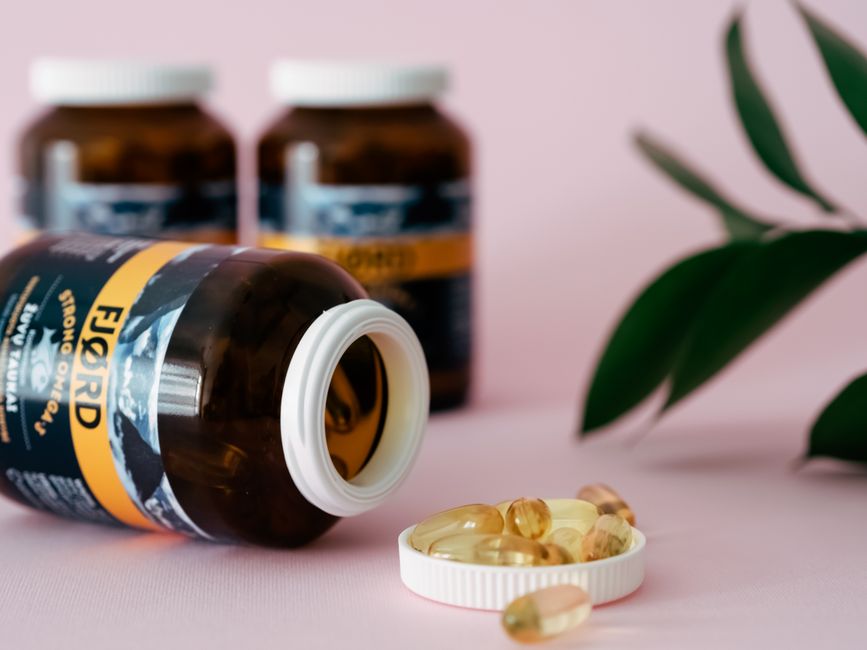
Omega-3 supplements all promise the same two fatty acids, EPA and DHA, but they differ a lot in form, dose and how easy they are to take. The label on the front rarely tells you how much of either you are actually getting. Below are ten types of omega-3 supplement, ranked by how useful they are for most people, with what each one does well.
How We Picked
- EPA and DHA per serving — the only numbers that matter. "1,000 mg fish oil" is the weight of the oil, not the omega-3 content, which is often 300 mg or less.
- Chemical form — triglyceride and free fatty acid forms are generally absorbed somewhat better than the ethyl ester form, though the difference is smaller than marketing suggests.
- Freshness and purity testing — third-party certification for oxidation (peroxide and anisidine values) and for heavy metals and PCBs.
- Tolerability — whether people can actually keep taking it without fishy burps or stomach upset.
- Cost per gram of EPA + DHA — not cost per bottle, which hides weak dosing.
1. Standard Fish Oil Softgels
The default choice, and for most people the sensible one. A typical softgel gives 250-350 mg of combined EPA and DHA, so labels usually suggest two or more. They are inexpensive, widely available and well studied.
Best for: anyone starting out who wants the most evidence and the lowest cost.
2. Concentrated Triglyceride-Form Fish Oil
These concentrate the oil so a single softgel can carry 500-800 mg of EPA and DHA, in the triglyceride form found naturally in fish. Fewer pills for the same dose. They cost more per bottle but often less per gram of actual omega-3.
Best for: people who want a meaningful dose without swallowing four capsules.
3. Algae Oil
Omega-3s originate in marine algae; fish simply accumulate them. Algal oil skips the fish entirely and is the only plant-based source that supplies DHA directly. Most products are DHA-heavy with less EPA, and they generally cost more.
Best for: vegetarians, vegans, and anyone who dislikes fish oil outright.
4. Liquid Fish Oil
A teaspoon of liquid can deliver what four or five softgels would, which makes higher intakes practical. Flavoured versions, usually lemon, mask most of the taste. Liquids oxidise faster once opened, so buy a size you will finish and keep it refrigerated.
Best for: higher daily intakes, and anyone who struggles with pills.
5. High-EPA Formulas
These skew the ratio strongly toward EPA. Most of the research on mood and on triglyceride levels has used EPA-dominant preparations, which is why these exist as a separate category. The evidence is genuinely mixed and results vary between studies.
Best for: people whose doctor has pointed them toward EPA specifically.
6. High-DHA and Prenatal Formulas
DHA is the fatty acid concentrated in the brain and the retina, and prenatal products are built around it. Many also come in smaller softgels, which helps during pregnancy when nausea is common. Doses vary widely, so compare the DHA figure rather than the pill count.
Best for: pregnancy and breastfeeding, under guidance from a midwife or doctor.
7. Enteric-Coated Softgels
The coating delays release until past the stomach, which reduces fishy repeat and reflux for most people who get it. The trade-off is that a coating can also mask an oil that has gone rancid, since you never taste it. Buy these only from brands that publish oxidation testing.
Best for: people who gave up on fish oil because of the burps.
8. Cod Liver Oil
A traditional option that supplies EPA and DHA along with naturally occurring vitamins A and D. The omega-3 content per serving is usually modest compared with a concentrate. Because vitamin A accumulates in the body, cod liver oil is one to be careful about stacking with other supplements that contain it.
Best for: people who want a traditional, minimally processed oil.
9. Krill Oil
Krill oil delivers omega-3s bound to phospholipids and includes astaxanthin, an antioxidant. Absorption may be slightly better gram for gram, but the evidence for a real-world advantage is thin, and the EPA and DHA per capsule is typically low. It is also among the most expensive options per gram.
Best for: people who tolerate it well and are not dose-chasing.
10. Omega-3 Gummies
Gummies solve the compliance problem and nothing else. The omega-3 content per gummy is usually small, often under 100 mg of EPA and DHA combined, and many add sugar. They are better than skipping it entirely, but you will need several to approach what one softgel provides.
Best for: children, or adults who will not take anything else.
Common Mistakes to Avoid
- Reading the wrong number. Check the EPA and DHA line on the supplement facts panel, not the "fish oil" figure on the front of the bottle.
- Assuming flaxseed counts. Flax, chia and walnuts supply ALA, which the body converts to EPA and DHA only in small amounts. They are not a substitute if EPA and DHA are the goal.
- Ignoring freshness. Oxidised oil smells sharply fishy and offers less benefit. Smell a capsule occasionally, store the bottle away from heat and light, and respect the expiry date.
- Taking it on an empty stomach. Omega-3s absorb better with a meal containing some fat, and it reduces stomach upset.
- Skipping the conversation about medication. Omega-3s can interact with blood thinners and matter before surgery. If you take prescription medicines, raise it with your doctor or pharmacist before starting.
Two or three servings of oily fish a week covers most people's needs without a supplement at all. A supplement is a reasonable fallback when that is not happening, and the best one is simply the one you will keep taking.
This article is for general information only and is not medical advice. Speak with a qualified healthcare professional before making significant changes to your diet, exercise, or health routine.