
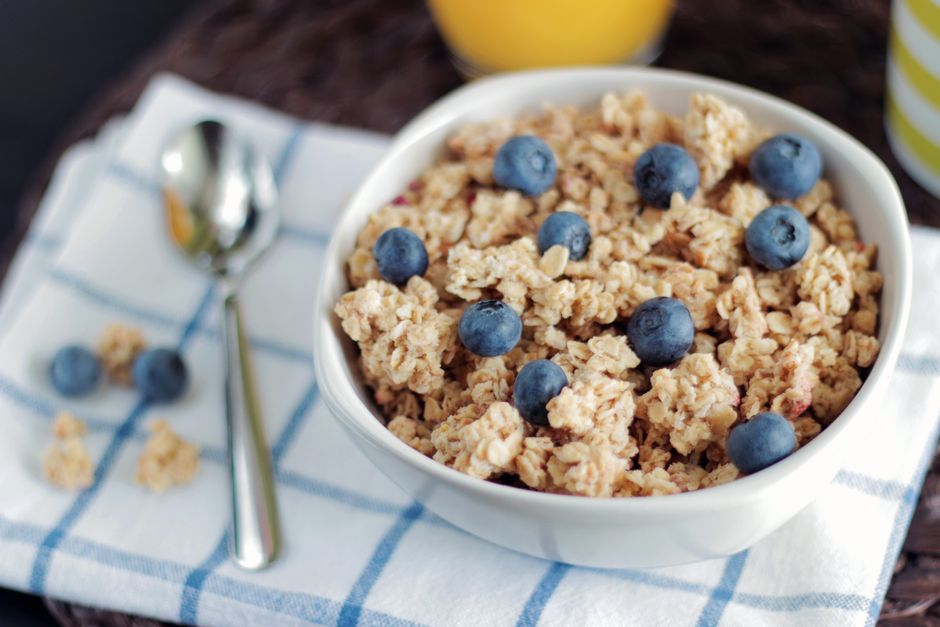
Most people fall short of the fibre targets commonly cited by health authorities — roughly 25 grams a day for women and 38 grams for men. Breakfast is the easiest meal to fix, because a handful of swaps does most of the work. Below are ten breakfast foods that carry real fibre, ranked by how much they add for how little effort.
What to Look For
- Fibre per realistic serving. A food can be "high fibre" on paper and still contribute little if the portion you actually eat is tiny.
- Whole rather than refined. Intact grains, skins and seeds keep the fibre that milling strips out.
- A mix of soluble and insoluble. Oats, beans and fruit lean soluble; bran, seeds and whole wheat lean insoluble. Most people benefit from both.
- Something you will eat again tomorrow. Consistency matters more than any single food.
- Low added sugar. Plenty of "high fibre" cereals and bars are mostly sugar with fibre added back in.
1. Rolled or Steel-Cut Oats
A 40 gram dry serving delivers roughly 4 grams of fibre, much of it beta-glucan. Beta-glucan is one of the better-studied fibres, with reasonably consistent evidence for a modest effect on LDL cholesterol. Steel-cut and rolled oats behave similarly; instant oats are still oats but often arrive pre-sweetened.
Best for: a reliable everyday base you can build on.
2. Chia Seeds
Roughly 10 grams of fibre in a 28 gram serving makes chia the densest option on this list. They absorb liquid and thicken, which is why overnight puddings work. Two tablespoons stirred into yoghurt or oats is an easy addition.
Best for: the biggest fibre gain from the smallest change.
3. Raspberries and Blackberries
A cup of either lands around 8 grams, far ahead of most fruit, because you eat the seeds and skins. Frozen berries hold up well and cost less than fresh out of season. They also add sweetness without added sugar.
Best for: topping porridge, yoghurt or cereal.
4. Bran-Based Cereal
Wheat bran cereals are among the highest-fibre packaged foods available, with some serving sizes reaching 10 grams or more. Read the label rather than the front of the box — fibre content and added sugar vary widely between products in the same aisle. Plain wheat bran stirred into other cereals works too.
Best for: people who want the numbers to move quickly.
5. Black Beans or Other Cooked Beans
Half a cup of cooked black beans carries around 7 to 8 grams of fibre plus a useful amount of protein. Savoury breakfasts are common across much of the world and beans travel well into eggs, tortillas or toast. Tinned beans, rinsed, are fine.
Best for: savoury breakfasts and staying full until lunch.
6. Avocado
A whole medium avocado holds roughly 9 to 10 grams of fibre, and half is a normal serving. It is also energy-dense, so it suits people who want breakfast to carry them a while rather than those counting calories closely. Works on toast, in eggs or blended into a smoothie.
Best for: a filling breakfast with minimal preparation.
7. Pears and Apples, Skin On
A medium pear sits near 5 to 6 grams and an apple near 4, provided you leave the skin on. Peeling removes a meaningful share of it. Sliced into porridge or eaten alongside toast, either one closes a gap cheaply.
Best for: the least fussy, most portable option here.
8. 100% Whole Grain Bread
Two slices of genuine whole grain bread add roughly 4 to 6 grams, against 2 or less for white. Check that a whole grain is the first ingredient — "multigrain", "wheat" and "stoneground" are not reliable signals on their own. Dense rye and sprouted-grain loaves tend to be at the higher end.
Best for: a one-off swap that needs no new habit.
9. Ground Flaxseed
Around 2 grams of fibre per tablespoon, plus alpha-linolenic acid. Ground is the right form here; whole seeds pass through largely undigested. Keep it refrigerated, since the oils turn rancid faster than most pantry items.
Best for: quietly adding fibre to something you already eat.
10. Almonds and Other Nuts
A 28 gram serving of almonds provides roughly 3 to 4 grams of fibre alongside protein and fat, which slows the meal down. Pistachios and hazelnuts are broadly comparable. Portions creep easily, so measure once to see what 28 grams actually looks like.
Best for: a topping or a breakfast you eat on the move.
Common Mistakes
- Going from low to high overnight. A sudden jump often causes bloating and wind. Increasing gradually over a couple of weeks is the usual advice.
- Forgetting fluid. Soluble fibre works by holding water, so a higher-fibre diet generally needs more of it.
- Trusting front-of-pack claims. The nutrition panel is the only place the fibre and sugar figures are comparable between products.
- Relying on a supplement instead of food. Fibre powders can help some people, but whole foods bring nutrients that isolated fibre does not.
- Expecting too much from one food. Claims that a single seed or drink drives weight loss or "detoxifies" are not well supported; the evidence behind fibre is about overall intake and dietary pattern, not any one item.
Figures above are approximate and vary by variety, ripeness and brand. If digestive symptoms are ongoing or you have a condition that affects what you can eat, that is worth raising with a professional rather than solving with a list.
This article is for general information only and is not medical advice. Speak with a qualified healthcare professional before making significant changes to your diet, exercise, or health routine.