
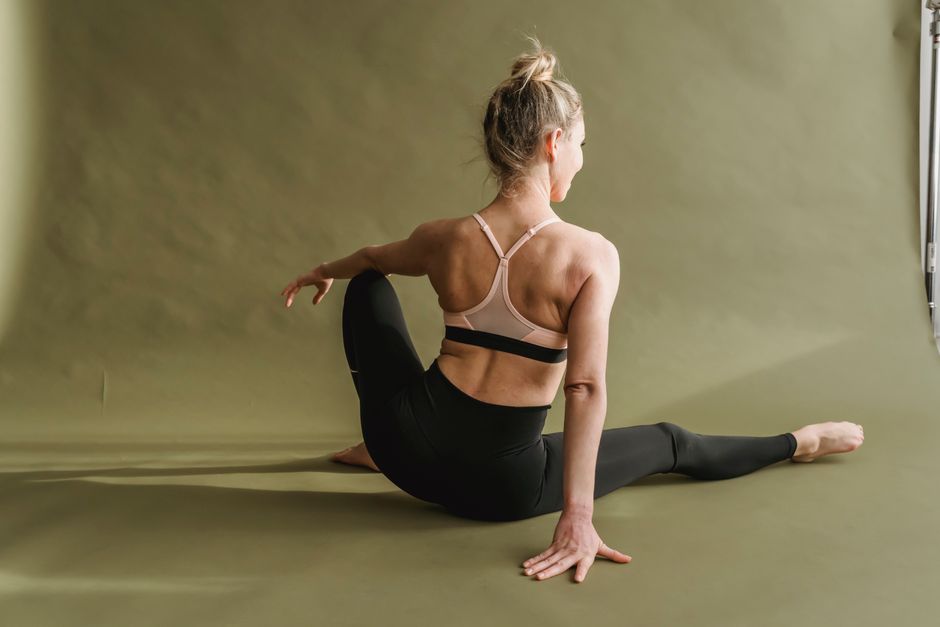
Most lower back tightness comes from sitting still too long, not from doing anything dramatic. A short daily stretch routine is one of the simplest ways to keep the area moving, and it takes about ten minutes.
Below are ten stretches that work well as a daily set. They cover the hips, glutes, hamstrings and spine, since stiffness in those areas often shows up as back discomfort.
How We Picked
- Low barrier to entry. Each one needs a floor and nothing else — no straps, blocks or machines.
- Gentle by default. We left out deep or loaded positions that are easy to overdo at home without supervision.
- Covers the whole chain. Hips, hamstrings and glutes pull on the pelvis, so the list includes them, not just the back itself.
- Mainstream and widely taught. These appear in standard physiotherapy and general exercise guidance rather than in niche programmes.
- Quick enough to repeat. Consistency matters more than any single stretch, so nothing here takes more than a minute or two.
1. Knees-to-Chest
Lie on your back and draw both knees gently toward your chest, hands behind the thighs or over the shins. Let your lower back settle into the floor and breathe normally for 20 to 30 seconds. It is a mild flexion stretch and a good opener because it asks very little of you.
Best for: starting the routine and easing general stiffness after sitting.
2. Single Knee-to-Chest
Same position, one leg at a time, with the other leg straight along the floor or bent with the foot flat. Hold 20 to 30 seconds per side. Working one side at a time often reveals that one hip is noticeably tighter than the other.
Best for: uneven tightness between the left and right side.
3. Cat-Cow
On hands and knees, alternate between rounding your back toward the ceiling and letting it sag as you lift your chest. Move slowly with your breath for 8 to 10 rounds. This is a movement rather than a hold, which makes it useful as a warm-up for everything else.
Best for: waking up the spine first thing in the morning.
4. Pelvic Tilts
Lie on your back with knees bent and feet flat. Flatten your lower back into the floor by tilting the pelvis, hold a couple of seconds, then release. Ten to fifteen slow repetitions is plenty. The range is small on purpose — it is about control rather than stretch.
Best for: people who find bigger stretches uncomfortable and want somewhere to start.
5. Child's Pose
From hands and knees, sit your hips back toward your heels and walk your hands forward, letting your forehead rest on the floor. Hold for 30 seconds to a minute. Widening the knees usually makes it easier on the hips and lower back.
Best for: a longer, passive hold you can relax into.
6. Supine Figure-Four
On your back, cross one ankle over the opposite thigh to make a figure four, then pull that thigh toward you. Hold 30 seconds per side. Most of the stretch lands in the glute and outer hip rather than the back itself.
Best for: tightness deep in the hip or buttock after long drives.
7. Supine Spinal Twist
Lying on your back with arms out to the sides, let both bent knees fall to one side while keeping your shoulders down. Hold 30 seconds, then switch. Keep it gentle; a twist should feel like a long stretch, not a wrench.
Best for: rotation, which most desk-based days leave out entirely.
8. Hamstring Stretch on Your Back
Lie down, bend one knee toward your chest, then slowly straighten the leg toward the ceiling with hands behind the thigh. Hold 30 seconds per side. Doing it on the floor is easier on the back than bending forward from standing.
Best for: tight hamstrings, which tug on the pelvis and often get blamed on the back.
9. Kneeling Hip Flexor Stretch
Kneel on one knee with the other foot forward, then shift your weight gently forward while keeping your torso upright. You should feel it along the front of the hip of the kneeling leg. Hold 30 seconds per side and put a cushion under the knee if the floor is hard.
Best for: hips that have spent the day in a chair.
10. Sphinx Pose
Lie face down and prop yourself on your forearms, elbows under the shoulders, letting your lower back extend gently. Hold 20 to 30 seconds. Some people find mild extension more comfortable than flexion and others find the opposite, so treat this one as optional and judge by how it feels.
Best for: finishing a routine that was otherwise all forward bending.
Common Mistakes to Avoid
- Pushing into pain. A stretch should feel like tension easing, not a sharp or shooting sensation. If something hurts, back off or skip it.
- Bouncing. Hold still rather than pulsing in and out of the position.
- Holding your breath. Breathing normally helps you stay in a hold long enough for it to be worth doing.
- Treating it as a one-off. A short set most days tends to be more useful than a long session once a week.
- Stretching instead of moving. Stretching helps, but walking and general activity do more for a stiff back over time. Evidence on stretching alone is mixed, so think of it as one part of staying mobile rather than a fix in itself.
If back pain is severe, came on after a fall or injury, does not settle over a few weeks, or comes with numbness, weakness or changes in bladder or bowel function, that is a reason to get it looked at rather than to stretch harder.
This article is for general information only and is not medical advice. Speak with a qualified healthcare professional before making significant changes to your diet, exercise, or health routine.