
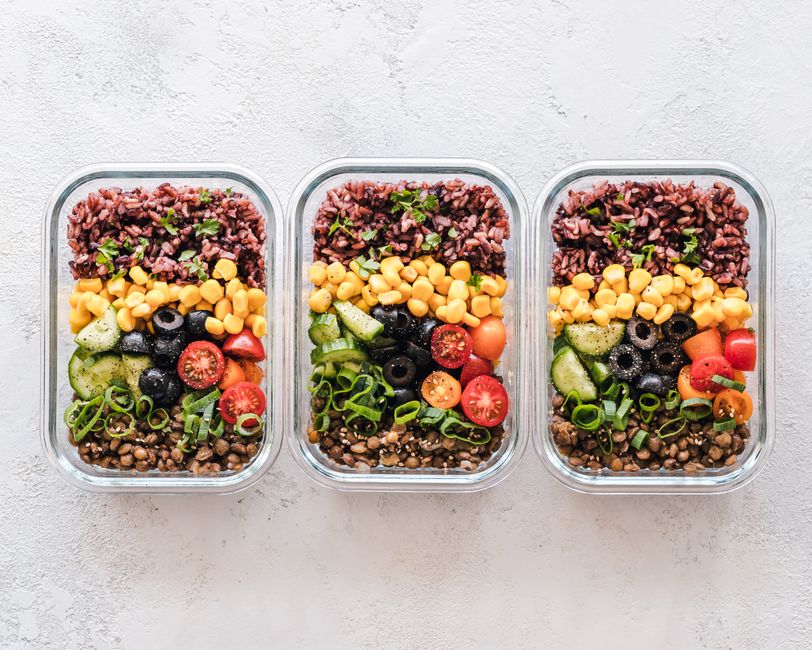
The right container decides whether your meal prep gets eaten or forgotten at the back of the fridge. Leaks, warping and lids that stop sealing are the usual reasons a set gets abandoned after a month. Below are ten container types worth considering, ranked by how useful they are for most people prepping a few days of food at a time.
What to Look For
- Seal quality. Four locking clips with a silicone gasket hold liquids far better than a lid that only snaps on at the rim.
- Oven, microwave, freezer and dishwasher compatibility. Check each one separately — a container can be dishwasher safe but not microwave safe.
- Stackability and shape. Rectangular containers waste less fridge space than round ones, and flat lids let you stack without wobble.
- Portion sizing. Most single lunches fit in roughly 3 to 5 cups. Buying one giant size means over-packing or half-empty boxes.
- Replaceable parts. Lids and gaskets fail long before the base does, so a line that sells spares lasts years longer.
1. Borosilicate Glass Containers with Locking Lids
Glass does not stain, does not hold onto curry or garlic smells, and goes from fridge to oven in most lines. Borosilicate handles temperature changes better than cheaper soda-lime glass. The trade-off is weight and the risk of a chipped rim.
Best for: Home and office prep where you reheat in a microwave or oven and want containers that still look new after two years.
2. BPA-Free Polypropylene Sets
Lightweight plastic remains the practical default for most people. A good polypropylene set is cheap enough to buy in quantity, survives being dropped, and weighs almost nothing in a bag. Expect lids to loosen and surfaces to scratch over time.
Best for: Prepping five or more meals a week on a budget, or carrying lunch in a backpack.
3. Compartment (Bento-Style) Containers
Two or three built-in dividers keep dressing off the greens and sauce off the rice. Look for dividers moulded into the base rather than loose inserts, which shift and leak between sections. Two-compartment designs are more flexible in practice than four-compartment ones.
Best for: Salads, grain bowls and anything you want to keep dry until you eat it.
4. Stainless Steel Tins
Steel is close to indestructible and never absorbs odours or stains. It will not go in a microwave, so it suits cold meals or food you reheat on a stove or in an air fryer. Many designs are not fully liquid-tight, so check before packing soup.
Best for: Cold lunches, kids' boxes and anyone tired of replacing cracked plastic.
5. Soup and Liquid-Tight Jars
Screw-top jars with a gasketed lid are the only containers most people should trust with broth, chilli or dressing. The thread seals more reliably than clip-on lids under pressure. Fill to the shoulder, not the brim, if you plan to freeze them.
Best for: Soups, stews, overnight oats and anything that would otherwise coat the inside of your bag.
6. Deli-Style Round Containers
The plain restaurant-supply tubs are inexpensive, come in a few sizes that all share one lid, and stack into a tidy column. They are not elegant and not especially durable, but you can buy forty of them for the price of one premium glass set.
Best for: Batch-cooking components — rice, beans, roasted vegetables, sauces — rather than finished meals.
7. Insulated Food Jars
A vacuum-insulated jar keeps hot food hot for several hours, which matters if you have no microwave at work. They are bulky and hold one portion at most. Preheating the jar with boiling water for a few minutes before filling makes a noticeable difference.
Best for: Job sites, schools, travel and anywhere reheating is not an option.
8. Collapsible Silicone Containers
These fold down to a fraction of their height when empty, which helps if you commute or have little cupboard space. Food-grade silicone handles freezer and microwave temperatures well. The flexible walls make them awkward to stack when full, and some lines retain odours.
Best for: Small kitchens, commuters and travel where packing the empties home is the problem.
9. Wide-Mouth Mason Jars
Standard canning jars are cheap, widely available and seal well with a two-piece lid. Wide-mouth versions are much easier to fill and eat from than narrow ones. Glass plus a tall shape means they tip and break more easily than a flat box.
Best for: Layered salads, overnight oats, yoghurt parfaits and fridge-stored dressings.
10. Mini Containers for Sauces and Snacks
Small 2 to 4 ounce pots for dressing, nut butter, dips or portioned nuts solve a specific problem well. Keeping dressing separate until the last minute is the single easiest way to stop a prepped salad going limp. Buy a set with one shared lid size.
Best for: Anyone whose prepped lunches arrive soggy, and for portioning snacks ahead of the week.
Common Mistakes to Avoid
- Buying one huge set in a single size. Two or three sizes covers far more situations than ten identical boxes.
- Mixing brands. Lids are rarely interchangeable, and a drawer of orphaned lids is how most sets die.
- Sealing food while it is still warm. Let it cool first, or condensation collects and the texture suffers.
- Putting gasketed lids through a hot dry cycle. Heat hardens silicone over time; wash lids by hand if you want the seal to last.
- Ignoring your actual fridge. Measure the shelf depth before buying, especially for long glass containers.
Food safety guidance generally suggests refrigerating cooked leftovers promptly and eating them within about three to four days, with freezing for anything longer. No container changes that — it only decides how well the food travels and reheats in the meantime.
This article is for general information only and is not medical advice. Speak with a qualified healthcare professional before making significant changes to your diet, exercise, or health routine.